
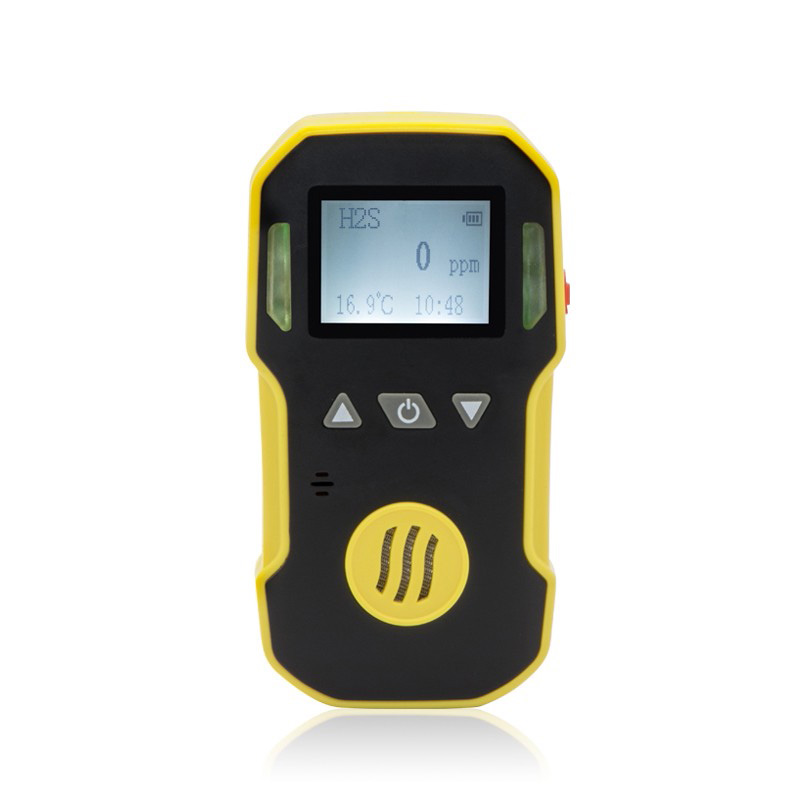
Carbon monoxide (CO) is a colorless and odorless gas produced when carbon-containing fuels undergo incomplete combustion. It can occur around boilers, furnaces, engines, generators, industrial heating systems, and enclosed work areas where combustion equipment operates. Because people cannot reliably detect CO by smell, instrument-based monitoring is an important part of workplace hazard control.
Selecting a suitable carbon monoxide sensor requires more than choosing a device labeled for CO. Safety teams should evaluate the expected concentration, monitoring objective, sensor technology, operating environment, alarm functions, and applicable standards before purchasing equipment.
Why Carbon Monoxide Detection Matters
CO is particularly hazardous because it interferes with the body’s ability to transport and use oxygen. NIOSH identifies a recommended exposure limit of 35 ppm as an eight-hour time-weighted average and 200 ppm as a ceiling concentration. NIOSH also lists an IDLH concentration of 1,200 ppm.
OSHA’s general industry limit is 50 ppm as an eight-hour time-weighted average. Requirements can vary by industry, however, so organizations should identify the regulations applicable to their specific workplace rather than relying on a single value for every application.
Potential CO exposure can change quickly when ventilation fails, combustion equipment malfunctions, or workers enter enclosed spaces. Continuous or portable monitoring can therefore provide information that cannot be obtained through visual inspection alone.
Match the Sensor to the Monitoring Objective
The first step in selecting a CO sensor is defining what the instrument needs to accomplish. Personal monitoring focuses on the atmosphere around a worker, while area monitoring evaluates conditions at a particular location. Leak investigation, confined-space entry, process monitoring, and emergency response can each require different equipment characteristics.
A portable Gas Detector is useful when workers move between areas or need to check atmospheric conditions during maintenance and inspections. A fixed detector is more appropriate when one location requires continuous, unattended monitoring.
For applications where CO is the primary known hazard, a single-gas instrument can provide focused monitoring. Where CO may occur together with oxygen deficiency, combustible gases, or other toxic gases, a multi-gas instrument may provide broader atmospheric coverage.
Evaluate Sensor Technology and Interference
Electrochemical sensors are widely used for toxic gas detection, including carbon monoxide. OSHA’s technical guidance explains that electrochemical toxic-gas sensors generate an electrical signal related to gas concentration, but also warns that interfering gases can affect readings or damage sensors.
This makes interference assessment an important purchasing consideration. Safety teams should identify chemicals present in the process and review the manufacturer’s information regarding potential cross-sensitivity. A sensor that performs well in one workplace may require different evaluation in another environment.
OSHA’s Method 1026 for CO monitoring uses a direct-reading monitor with an electrochemical CO sensor and a selective filter designed to minimize interference. This illustrates why sensor construction and selectivity matter when accurate CO measurement is required.
Check Range, Response Time, and Alarm Functions
The sensor’s measuring range should correspond to the concentrations that the application may realistically encounter. An unnecessarily narrow range can limit usefulness during abnormal events, while an unsuitable range may reduce the value of measurements near occupational exposure criteria.
Response time is another consideration. A detector that responds slowly may provide less useful warning during a rapidly developing release. Buyers should compare the manufacturer’s stated response characteristics and determine whether they are appropriate for the intended monitoring task.
Alarm functions also deserve attention. Depending on the model, a portable Gas Detector may provide visual, audible, and vibration alerts. These features can help workers recognize hazardous conditions in noisy industrial environments or when they cannot continuously watch the display.
Consider the Working Environment
Industrial detectors may be exposed to dust, moisture, temperature changes, mechanical impact, and potentially explosive atmospheres. The selected device should therefore be suitable for the conditions where it will actually be used.
The BH-90A portable single-gas detector, for example, supports toxic-gas configurations specified by the customer and lists an accuracy of no more than 5% of full scale, a response time below 30 seconds, continuous operating time of at least eight hours, and an Ex ib IIB T3 Gb explosion-proof rating. Its published toxic-gas operating temperature range is -20°C to 50°C. These specifications apply specifically to the BH-90A configuration and should be confirmed for a CO application.
The company’s portable gas detector range also includes single-gas and multi-gas categories, allowing buyers to consider different monitoring arrangements.
Calibration and Maintenance Should Be Planned
Sensor selection is only one part of reliable monitoring. OSHA recommends calibration of toxic-gas monitoring equipment using an appropriate known standard and following the manufacturer’s instructions. Environmental factors such as altitude can also influence instrument response.
A maintenance program should cover calibration, functional checks, alarm verification, battery condition, sensor replacement, and physical inspection. Records can help demonstrate that equipment has been maintained and identify recurring issues.
Users should also follow the specific operating manual. The manufacturer advises customers to read the instruction manual carefully before using its products and provides after-sales support for product-related issues.
Company Introduction
For organizations evaluating carbon monoxide monitoring solutions, Bosean can provide a broader technology perspective beyond individual detection devices. Established in 2013, Henan Bosean Technology Co., Ltd. is a high-tech enterprise centered on sensors, supported by instrumentation, connected through IoT, and integrated with big data platforms.
Its solutions serve smart mining, smart gas systems, smart cities, smart industrial parks, energy storage safety, and smart environmental protection. Guided by a customer-centered philosophy of making safety an inevitability, the company combines professional dedication, innovation, accountability, and long-term vision to develop high-value products and system solutions. To discuss your specific CO monitoring requirements, “Contact Us” with your application details.