
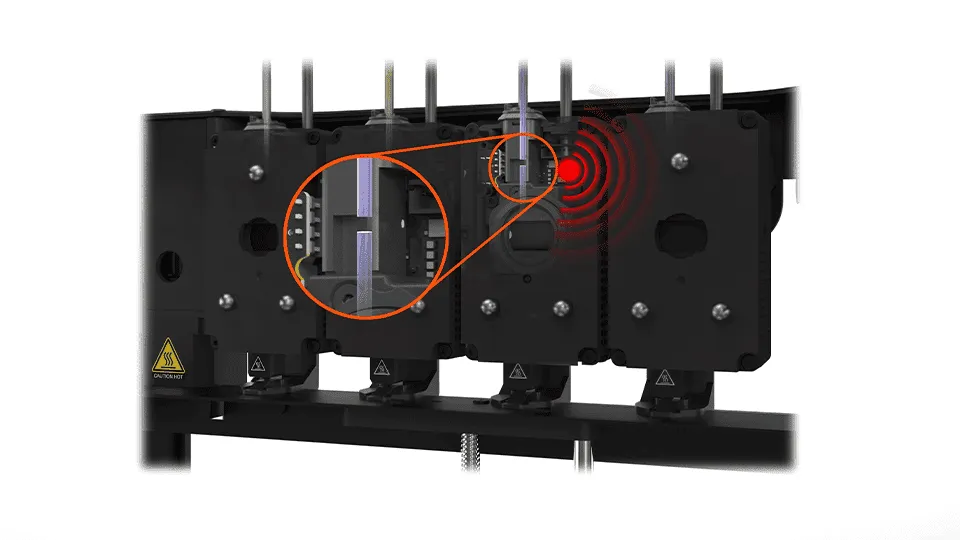
Choosing a 3D printer based only on its purchase price can lead to an inaccurate view of long term value. This is especially true for multi head 3D printers, which can use multiple materials, colors, or print heads within the same production workflow. While a lower upfront price may appear attractive, operating costs such as filament consumption, electricity, maintenance, replacement parts, and print efficiency also affect the total cost of ownership.
For users searching for the cheapest multi-head 3D printer, the better question is not simply which machine costs the least to purchase. Instead, it is which printer can deliver the required output while keeping ongoing expenses reasonable. Understanding these factors makes it easier to compare different systems and choose equipment that fits a specific workload.
Start With the Total Cost of Ownership
The total cost of a 3D printer includes much more than its initial purchase price. A practical evaluation should consider the purchase cost, installation requirements, materials, electricity, maintenance, spare parts, and potential downtime.
For example, two printers may have similar prices but very different material efficiency. If one machine requires more filament for purging or produces more failed prints, its actual operating cost can become higher over time. Similarly, a printer that requires frequent replacement of expensive components may not remain economical despite having a low initial price.
Total cost of ownership is therefore a more useful measurement than purchase price alone. This approach is particularly important for users running a multi-material 3D printing workflow regularly rather than occasionally.
Examine Material Consumption Carefully
Filament is one of the most direct recurring costs of 3D printing. Multi head systems can introduce additional material consumption because changing between materials or colors may require purging, cleaning, or other transition processes.
The actual material cost depends on the type of filament, the amount used per model, and how efficiently the printer manages material changes. Engineering materials can also cost considerably more than standard PLA or PETG, making efficient material usage even more important for professional applications.
When comparing the cheapest multi-head 3D printer options, users should examine how the machine handles multiple materials instead of looking only at the number of print heads. A system that minimizes unnecessary waste can provide better operating economics over a larger production volume.
Consider Electricity and Print Duration
Electricity is another part of operating expenses, although its importance varies according to print volume and local electricity rates. A printer’s heated bed, hot ends, motors, fans, and other components all contribute to energy consumption.
Print duration also matters indirectly. Longer print jobs can increase electricity usage and reduce the number of parts that can be produced within a given period. A machine with efficient multi head operation may therefore have practical advantages when producing multiple complex or multi-material models.
For occasional hobby printing, electricity may represent a relatively small portion of total expenditure. For continuous production, however, it becomes more relevant when calculating the overall cost per printed part.
Factor in Maintenance and Replacement Parts
Maintenance costs should be considered before purchasing any multi head 3D printer. Multiple print heads and related components can create additional areas that require inspection, cleaning, calibration, or replacement.
Common maintenance considerations include nozzle condition, extruder components, belts, build surfaces, fans, and other mechanical parts. The frequency of maintenance depends on print volume, materials, operating conditions, and printer design.
A cost comparison should therefore include the expected availability and price of replacement components. Easy access to spare parts can also reduce downtime, which has practical value for users who depend on their printer for regular production.
Evaluate Print Reliability and Material Management
A low operating cost has little value if a printer frequently produces failed prints. Failed jobs consume filament, electricity, and machine time while delaying the intended production schedule.
Multi head printing can be particularly sensitive to calibration and material management. Different materials may require different temperature settings, bed adhesion conditions, or cooling requirements. A well designed system should provide appropriate control over these parameters to help maintain consistent print quality.
Users should also consider how easily the printer can switch between materials and maintain alignment between print heads. Reliable operation can reduce wasted resources and make the actual cost per successful part more predictable.
Look Beyond the Purchase Price
When comparing multi head 3D printers, users should calculate the expected cost based on their own printing habits. A hobbyist producing a few models each month will have different priorities from a workshop producing prototypes or functional parts every day.
For example, a higher priced printer may make financial sense if it reduces material waste, requires less maintenance, or improves successful print rates. Conversely, paying for advanced functions that are rarely used may increase the initial investment without providing meaningful savings.
This is why there is no universal answer to which machine is the cheapest. The most economical option depends on print volume, material requirements, desired output, maintenance expectations, and available features.
How WonderMaker 3D Fits Into the Evaluation
WonderMaker 3D provides multi head 3D printing solutions that can be considered when evaluating equipment for multi-material and multi-color applications. Its ZR Ultra is an example of a system designed around multi head printing.
Rather than judging a machine solely by its listed price, users can assess its capabilities alongside material management, printing efficiency, maintenance requirements, and expected workload. This provides a more realistic basis for determining whether a particular printer represents good long term value.
The same evaluation method can be applied to WonderMaker 3D and other manufacturers. Looking at operating conditions and cost per successful print helps users make a purchasing decision based on actual requirements rather than headline pricing.
Making a More Informed Purchasing Decision
Finding the cheapest multi-head 3D printer should ultimately mean finding the most economical solution for the intended application, not simply the machine with the lowest sticker price. Material waste, energy consumption, maintenance, reliability, and productivity can all influence the final cost.
Before purchasing, users should estimate their expected print volume and material consumption, then compare these figures across suitable printers. Evaluating the complete operating picture can reveal which system offers practical value over months or years of use.
For buyers considering a multi head system, this approach provides a clearer way to compare options and identify a printer that balances acquisition cost with predictable operating expenses.