
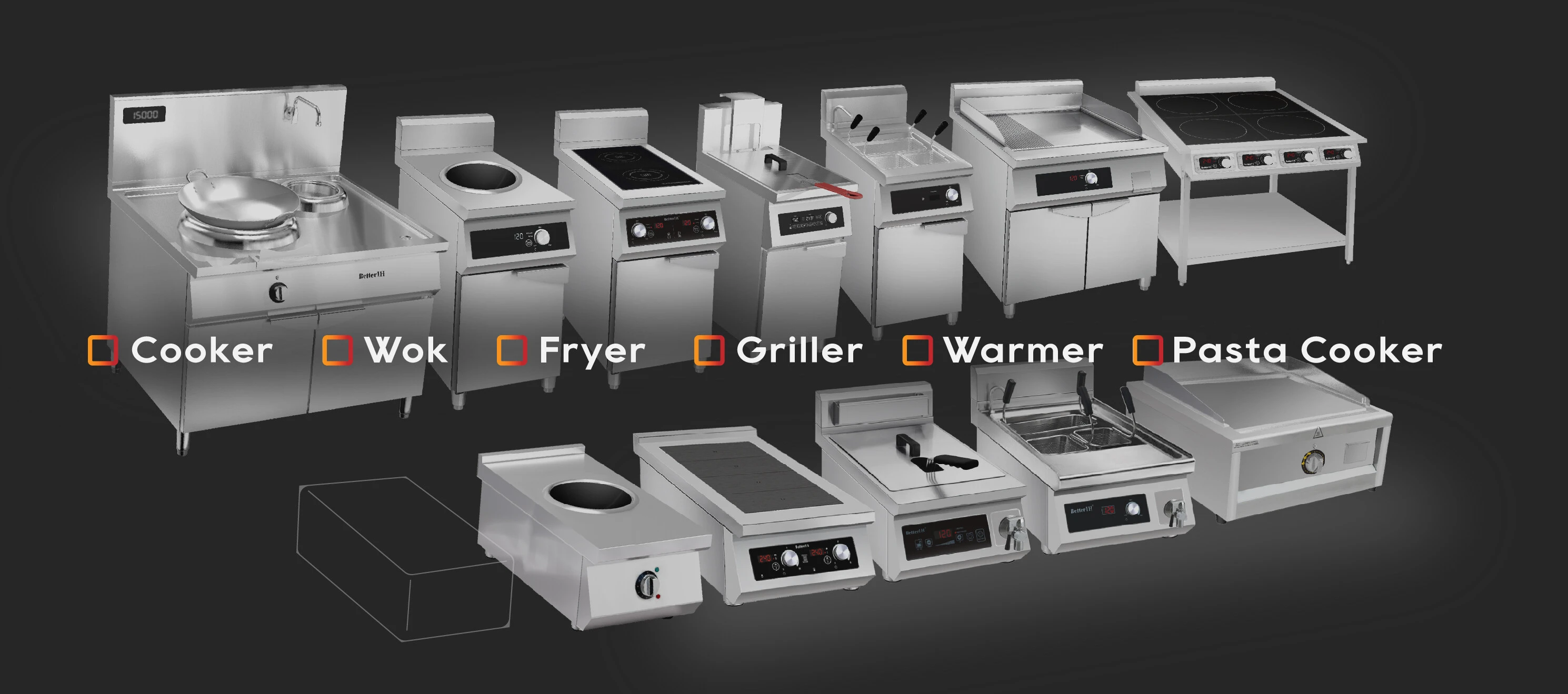
An appliance brand does not need to manufacture every component to create a distinctive cooking product. The harder question is which technical capabilities it owns and which responsibilities are better handled with a development partner. Induction products bring electronics, thermal design, construction, controls, and production together in one project.
Better Induction combines product design, research and development, and manufacturing for household and commercial induction equipment. That model provides a practical reference for evaluating when an ODM relationship supports a brand’s expansion and when internal development remains appropriate.
Identify the Capability Gap Before Seeking a Partner
Partner selection begins with a clear inventory of internal skills. A brand with strong channel knowledge and industrial design talent might still lack specialized induction engineering or established production processes.
Separate product ownership from implementation
The brand should retain decisions about target customers, positioning, price architecture, required functions, and acceptance criteria. Those decisions express the product strategy. An ODM can contribute the engineering methods, prototypes, supplier coordination, and manufacturing capacity needed to realize that strategy.
A project becomes confusing when neither side owns the final specification. A written product brief defines intended cooking tasks, installation format, target markets, interfaces, and required evidence before detailed engineering starts.
Compare the real cost of building capability
An internal program requires more than engineers. It needs test equipment, component sourcing, quality processes, production transfer, technical documentation, and personnel to support released models. The cost continues after the first prototype works.
Working with Better Induction or another ODM also involves additional management costs and greater reliance on an external supplier.
A useful comparison assigns every activity to either the internal team or the external partner, then prices the missing capabilities, technical coordination, tools, test work, and support after release. A low prototype price does not settle the make-or-partner decision.
When Restaurant Induction Cooker Projects Outgrow Internal Resources
Certain projects expose the limits of a brand’s existing operation. New equipment categories, unfamiliar electrical configurations, and compressed development schedules deserve special attention.
How a Cooking Equipment Manufacturer Helps with New Formats
A household appliance brand introducing professional cooking equipment must understand new usage patterns. Restaurant induction cooker projects involve fixed workstations, different operator behaviors, and more involved installation discussions than a portable domestic cooker.
A cooking equipment manufacturer with experience across table-top, drop-in, and specialized induction formats brings relevant product knowledge to that discussion. Its technical contribution supports manufacturing feasibility without replacing direct customer research.
Developing several related products
Coordinating a small family of commercial units requires version control across different sizes, controls, and supply configurations. A development partner working across multiple formats might reuse proven engineering methods while tailoring finished assemblies.
Better Induction’s commercial selection includes induction fryers, heavy-duty cooking equipment, and buffet stations. These are different applications, so a brand confirms the exact experience and resources assigned to its proposed models instead of assuming every project follows an identical workflow.
Evaluate the Partnership Beyond a Product Sample
A working sample proves basic operation, not manufacturing repeatability or support readiness.
Request a defined development process
A prospective partner explains concept review, design approval, prototype builds, validation, and production release. The brand understands which deliverables are provided at each stage and who authorizes progression to the next.
Important materials include revision-controlled drawings, agreed specifications, identified test requirements, and a method for handling deviations. These records reduce dependence on informal messages when engineering decisions affect later manufacturing batches.
Test communication through real scenarios
Ask how the teams would respond to a component substitution, a test failure, or a late change to the interface. Answers identify decision owners and the evidence needed for approval. For example, a late request for a different supply configuration tests whether the partnership has clear feasibility reviews, revised cost estimates, and named approvals.
Commercial terms also deserve scrutiny. Tool ownership, software access, intellectual property, sample charges, and minimum ordering arrangements should be understood before significant engineering work begins.
Choose a Collaboration Boundary That Supports Growth
Not every project requires a full-service ODM contract. The correct boundary depends on the brand’s capabilities and the product’s degree of customization.
Match engagement depth to complexity
A lightly differentiated existing model needs a different scope from a newly designed control interface or a custom workstation assembly. Changes to structural design, software, or power architecture increase the importance of development milestones and validation responsibilities.
The brand establishes when a change becomes a separate project. A cooking equipment manufacturer then helps define the technical scope and acceptance evidence. This prevents ordinary product customization from quietly expanding into an undefined design program with unclear commercial consequences.
Plan ownership after release
The relationship continues through engineering updates, customer feedback, replacement parts, and future derivatives. Define who keeps the master records and how approved changes reach production and field-support teams.
The variety of restaurant induction cooker formats also makes future range expansion possible, but every proposed extension needs its own demand and technical review.
Conclusion
An ODM partnership makes sense when specialized development and manufacturing needs exceed what a brand can efficiently maintain internally. The decision follows a capability assessment, defined project ownership, and evidence of repeatable processes.
Technical support becomes valuable when it advances a clear product strategy without weakening the brand’s control of its range. A limited project can test collaboration before a deeper commitment. Defined review gates and ownership of technical files reveal whether the arrangement remains workable as the product family grows.