
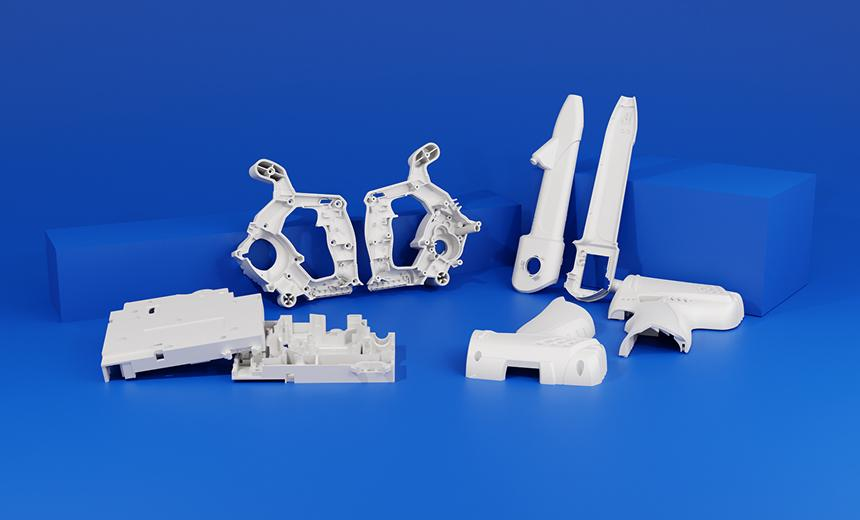
They at SoonSer specialize in providing cutting-edge 3D printing solutions, empowering industries to push the boundaries of design and manufacturing. SLA (Stereolithography) 3D printing technology has become a popular choice for various industries, thanks to its unmatched precision, surface quality, and the ability to print in a wide range of materials. From functional prototypes to artistic creations, SLA technology is helping companies to innovate faster and more efficiently.
The Versatility of SLA Resins in 3D Printing
The foundation of SLA printing is its photopolymer resin, which hardens when exposed to ultraviolet (UV) light. This resin comes in a variety of formulations tailored to specific needs, making SLA a versatile tool for many different sectors. SoonSer’s SLA printers are designed to handle a range of resins, from general-purpose materials for quick prototyping to more specialized options for engineering-grade parts.
Standard resins are commonly used in rapid prototyping and visual modeling, thanks to their smooth surface finish and high level of detail. These resins are ideal for creating concept models or low-volume prototypes for design validation. Engineering resins, on the other hand, are formulated to offer greater durability and performance characteristics, such as heat resistance, impact resistance, and flexibility. This makes them suitable for producing functional parts that can withstand real-world conditions. SoonSer’s SLA printers are equipped to print with these high-performance resins, ensuring consistent results and high-quality parts every time.
Additionally, transparent resins are widely used for optical applications such as lighting products or fluidic designs, while castable resins support the creation of molds for jewelry or metal casting. The precision of SLA printing and the variety of available resins make it an indispensable tool in industries like automotive, aerospace, and healthcare, where the accuracy of prototypes can directly affect product development timelines and quality.
The Rise of SLA Ceramic 3D Printing
In addition to standard resins, one of the most exciting developments in SLA 3D printing is the ability to print with ceramic materials. SLA ceramic printing opens up new possibilities for industries requiring high-performance parts that can withstand extreme conditions, such as high temperatures, wear, and corrosion. Ceramic materials are ideal for use in applications like aerospace, automotive, and medical devices, where durability and thermal resistance are critical.
SoonSer’s SLA ceramic printer systems are designed to handle specialized ceramic slurries, which contain fine ceramic particles suspended in a resin matrix. The SLA ceramic 3D printing process works similarly to traditional SLA, where the material is cured layer by layer under UV light. Once the part is printed, it undergoes a post-processing stage where the resin is removed, and the ceramic material is sintered to achieve its final strength and density.
This process allows the creation of highly detailed, complex ceramic components that would be difficult or impossible to achieve with traditional manufacturing methods. The result is a part that retains the fine detail and precision of SLA printing but with the added benefits of ceramic material properties, including high heat resistance, hardness, and chemical stability. Whether used in the production of heat exchangers, sensors, or intricate jewelry pieces, SLA ceramic 3D printing is transforming how industries approach ceramic part production.
Competitive Advantages of SoonSer’s SLA 3D Printers
SoonSer has built a reputation for delivering high-performance 3D printing solutions that cater to a wide range of industries. One of the company’s major competitive advantages is its ability to support both standard resin printing and the more specialized SLA ceramic 3D printing technology. This flexibility allows businesses to expand their production capabilities without needing to invest in multiple types of 3D printing systems.
SoonSer’s SLA ceramic printer is particularly valuable in industries where complex ceramic parts are needed, offering a cost-effective alternative to traditional ceramic molding and casting. With their precise printing technology, users can produce intricate ceramic geometries with excellent surface finishes and dimensional accuracy. This is especially beneficial for industries such as automotive and aerospace, where precision and material performance are paramount.
Moreover, SoonSer’s printers are designed for ease of use, providing operators with an intuitive interface and reliable performance. Whether creating functional prototypes, producing small-batch production runs, or crafting artistic models, SoonSer’s SLA printers help users achieve their desired results with minimal trial and error. The printers are optimized for long-term reliability, reducing downtime and increasing productivity, which translates into faster turnaround times for customers.
Conclusion
SLA 3D printing is revolutionizing industries by offering unparalleled accuracy, surface quality, and material versatility. From high-resolution prototypes to intricate ceramic components, SoonSer’s SLA printers provide a comprehensive solution for businesses looking to innovate and streamline their production processes. With the added capability of SLA ceramic printing, SoonSer has positioned itself as a leader in delivering cutting-edge 3D printing solutions that meet the needs of industries ranging from manufacturing to art. Whether you are looking to create functional prototypes, high-performance parts, or artistic designs, SoonSer’s SLA ceramic printers will help you unlock new levels of creativity and production efficiency.