
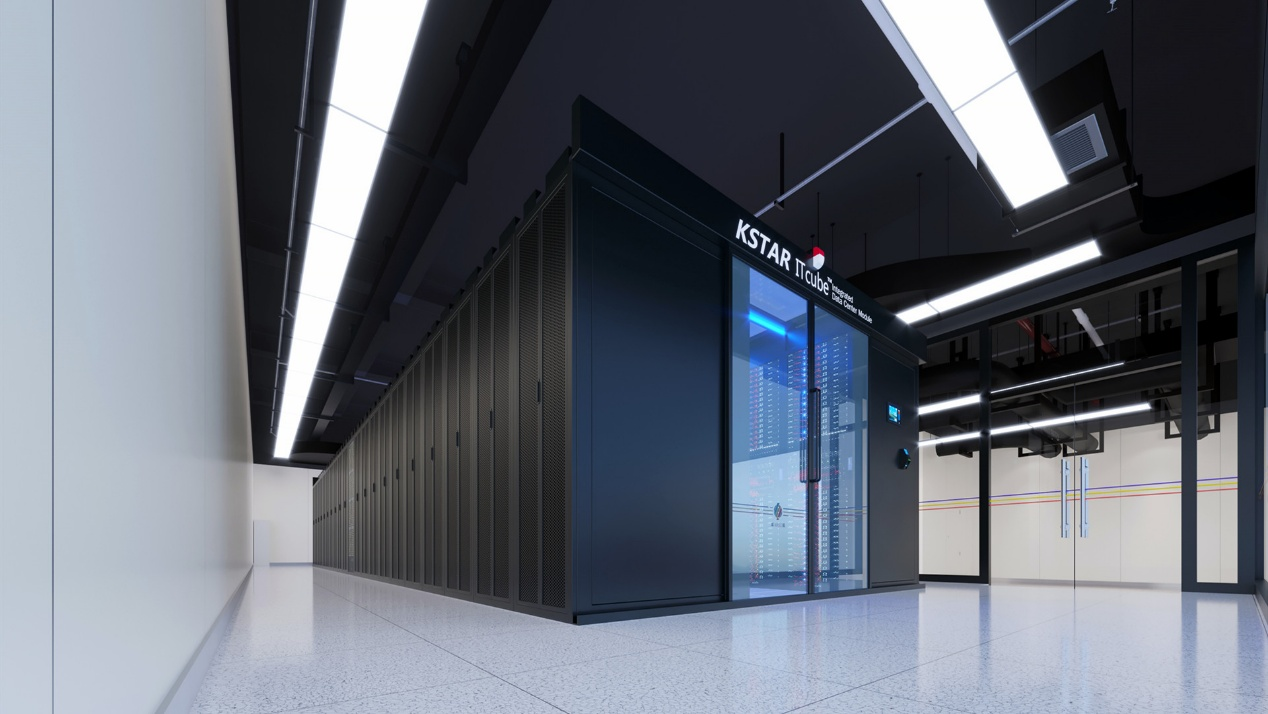
As enterprises become more dependent on data centers, automated operations, digital platforms, and connected equipment, stable electricity has become a core business requirement. UPS systems are no longer viewed simply as emergency backup devices. Businesses increasingly expect them to provide dependable power protection, flexible capacity, energy efficiency, and long-term operational value across demanding environments.
Reliability Is Becoming a Business Priority
Unexpected power disturbances can have consequences far beyond a temporary interruption. In a data center, unstable power can affect servers and network infrastructure. In manufacturing, an interruption can disrupt automated production and control systems. Financial institutions and transportation operations may also depend on continuous power for essential digital and electrical equipment.
This changing environment is driving enterprises to evaluate UPS systems according to reliability rather than rated capacity alone. The overall architecture must be able to protect critical loads while fitting the facility’s operational requirements.
KSTAR has built its business around critical power infrastructure since its establishment in 1993. Its portfolio covers UPS, batteries, precision air conditioning, modular data centers, photovoltaic solutions, and energy storage solutions. This combination allows UPS technology to be considered within a broader infrastructure strategy instead of as a standalone component.
For enterprise buyers, that broader approach can be valuable when power protection needs to work alongside cooling, battery systems, and other data center infrastructure.
Modular UPS Architecture Supports Enterprise Growth
Enterprise power requirements rarely remain fixed. Data centers may add computing capacity, manufacturers may expand production lines, and businesses may introduce new digital systems. A UPS solution that is difficult to scale can become a limitation as these requirements increase.
Modular architecture provides a more flexible alternative. Instead of designing the system around a large, fixed capacity from the beginning, enterprises can align installed capacity more closely with current requirements and expand as demand develops.
The modular UPS solution associated with KSTAR supports up to six main units in parallel redundancy. This configuration gives organizations greater flexibility when balancing capacity and redundancy requirements. It can also support a more structured approach to future expansion.
For technical teams, modularity can provide another practical advantage: infrastructure planning can be adjusted without necessarily replacing the entire UPS system. This can be especially useful for facilities where business growth is expected but future electrical demand is difficult to predict precisely.
Efficiency Can Influence Total Cost of Ownership
Power continuity is essential, but energy efficiency has become increasingly important in enterprise procurement. UPS equipment can operate continuously for many years, so energy losses can accumulate into significant operating expenses over its lifecycle.
The KSTAR UPS portfolio includes modular UPS technology designed to address both reliability and energy performance. Depending on the model and configuration, its three-level topology provides online efficiency of approximately 95.8% to 96%, while ECO mode can reach up to 99% efficiency under suitable conditions.
For enterprise facilities, improved efficiency can have implications beyond electricity consumption. Lower conversion losses can reduce unnecessary heat generation, which may also help ease demands on cooling infrastructure.
However, efficiency should always be assessed within the actual operating environment. Buyers should consider expected load levels, redundancy configuration, operating modes, battery type, and power quality requirements rather than choosing a system based on one efficiency number alone.
A lifecycle perspective is particularly important for large facilities. Purchase price is only one component of the total cost. Energy consumption, maintenance, expansion, replacement, installation, and service can all influence the long-term value of a UPS system.
Flexible Battery Options Strengthen Backup Planning
A UPS system is only as effective as the backup system that supports it. Battery selection therefore plays a central role in enterprise power continuity planning.
Different applications require different backup strategies. Some facilities need enough runtime to bridge a short interruption before another source becomes available. Others may need additional time for orderly shutdown procedures or continued operation of essential equipment.
KSTAR’s modular UPS solution supports both VRLA and lithium battery configurations, providing flexibility for organizations with different technical and operational requirements. This can be particularly relevant when enterprises are evaluating battery technology in relation to available space, maintenance practices, expected operating conditions, and lifecycle planning.
Battery management should also be integrated into the wider reliability strategy. Monitoring battery condition, maintaining suitable environmental conditions, and planning replacement cycles can help reduce the possibility of unexpected battery-related failures.
Application Flexibility Matters Across Industries
Enterprise UPS demand extends across many industries, but each environment has its own priorities. Data centers typically focus on continuous IT operation and infrastructure availability. Manufacturing facilities may need stable power for automation systems, controls, and production equipment. Banking and financial operations depend heavily on digital infrastructure, while transportation systems increasingly rely on electrical and automated technologies.
KSTAR’s UPS solution portfolio is designed for application scenarios including banking, transportation, manufacturing, and other environments where dependable power protection is required. This application-oriented approach is important because the correct UPS configuration depends on the type of load, facility design, availability requirements, and expected operating conditions.
For enterprises, the key question is therefore not simply how much power a UPS can support. It is whether the system can deliver the required protection and flexibility within the specific environment in which it will operate.
Integrated Infrastructure Creates More Consistent Planning
Modern enterprise facilities often require several infrastructure systems to work together. In a data center, UPS equipment needs to operate alongside batteries, cooling systems, power distribution, monitoring, and other critical components.
This makes integrated planning increasingly relevant. Enterprises can evaluate not only the UPS itself but also how its design fits within the wider facility architecture. Compatibility can simplify engineering decisions, while a coordinated infrastructure strategy may make maintenance and future expansion easier to manage.
KSTAR’s broader portfolio includes critical power and data center infrastructure, allowing organizations to consider UPS technology as part of a wider energy and facility strategy. This can be especially useful for projects where multiple infrastructure requirements need to be coordinated rather than procured independently.
For procurement managers and technical decision-makers, this broader perspective also supports a more complete evaluation of lifecycle cost, serviceability, expansion potential, and operational risk.
Why More Enterprises Are Evaluating KSTAR UPS Technology
The increasing focus on reliability, efficiency, modularity, and lifecycle cost is changing how enterprises approach UPS procurement. Instead of choosing equipment based only on initial capacity, organizations are looking for power protection that can adapt to changing requirements while maintaining dependable operation.
With modular architecture, flexible battery compatibility, efficient operation, and a broader critical-infrastructure portfolio, KSTAR provides an approach suited to enterprises evaluating long-term power protection requirements. For organizations planning data centers, manufacturing facilities, financial infrastructure, or other mission-critical environments, carefully selected UPS power solutions can become an important part of a resilient and scalable infrastructure strategy.