
Choosing a portable generator for home backup requires more than comparing prices or advertised wattage. Across Nigeria, Ghana, and South Africa, households may need to keep refrigerators, lighting, fans, security systems, and essential electronics operating during outages. The right brand depends on the required load, expected operating hours, maintenance access, and local availability of replacement parts.
Honda, Yamaha, Generac, and Firman each offer different product options. However, the strongest choice for one household may not suit another. Comparing their product ranges and ownership requirements provides a more useful starting point than relying on brand reputation alone.
What Matters Most in a Home Backup Generator?
Start with the appliances that must remain operational. A household supplying lights, a television, a router, and a refrigerator has different requirements from one running water pumps, air conditioners, or several high-power appliances simultaneously.
Calculate the combined running wattage and account for starting surges from motor-driven equipment. The generator must handle both conditions without persistent overloading. Buyers should also verify output voltage and frequency against local electrical requirements.
Operating conditions matter just as much. In areas where outages last several hours or occur repeatedly, fuel consumption, service intervals, noise, and access to technicians influence the total ownership cost. These factors help buyers evaluate power equipment manufacturers beyond the specifications printed on a product label.
How Four Generator Brands Differ
Honda: A Focus on Refined Portable Power
Honda offers inverter generators and conventional portable models for household backup, recreation, and worksite applications. Its official product range highlights quiet operation, fuel efficiency, and inverter technology on selected models. These features can appeal to households powering electronics alongside essential appliances.
For buyers in African markets, the main question is whether the desired model is available through a reliable local distributor. Purchase price, genuine spare parts, and technician availability should be assessed before paying a premium for a particular model.
Yamaha: Consider Product Availability First
Yamaha has produced portable generators for applications ranging from camping and outdoor work to emergency household power. Its product line includes inverter models designed for applications requiring stable electrical output.
However, availability deserves particular attention. Yamaha’s official generator website states that production of its generator models has ceased following the transfer of the power-products business, with sales limited to existing dealer stock. Buyers should therefore confirm current stock, warranty arrangements, and parts availability in their country before choosing this brand.
Generac: Portable Backup Options for Different Loads
Generac offers open-frame portable generators, inverter generators, and other portable power solutions. Its product portfolio includes models intended for household outages, with different output levels and operating features.
African buyers should distinguish between a product listed on an international website and one supported in their local market. Confirm the applicable voltage, frequency, warranty coverage, and availability of service components. A model designed for another region may not match local electrical requirements or provide convenient after-sales support.
Firman: Options Across Different Power Requirements
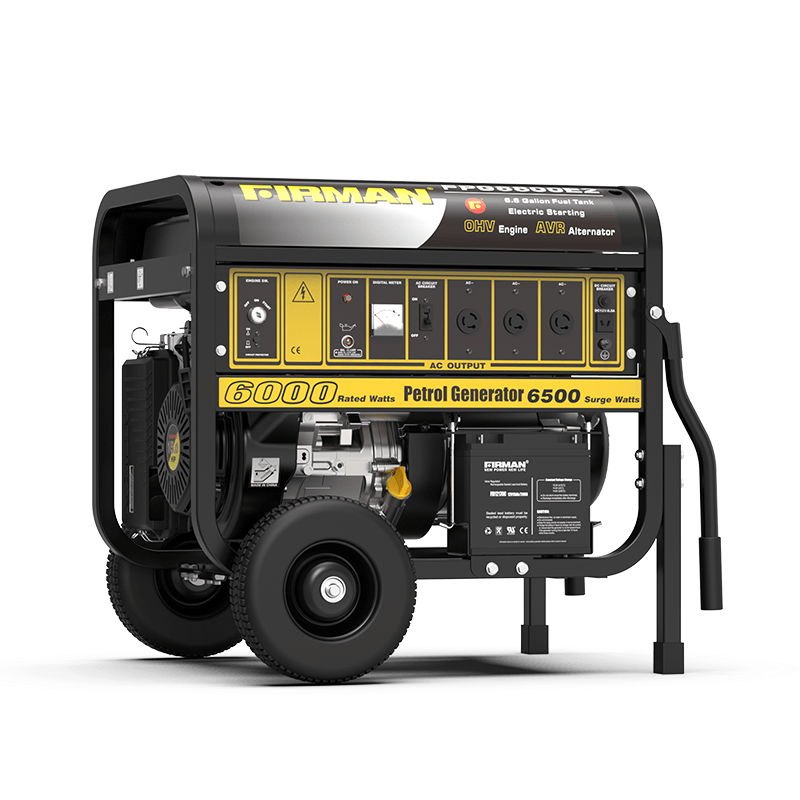
Firman is committed to providing reliable and durable power solutions for diverse customer needs. Its product portfolio includes petrol and diesel generators, inverter products, and models designed for residential and other applications. With open-frame and silent-canopy options available, customers can choose equipment that suits their power requirements and operating environments.
Building on product quality, Firman also continues to strengthen its service network across Africa. Its service centers have introduced an enhanced service system designed to provide efficient pre-sales and after-sales support. This combination of dependable products and responsive local service helps customers make informed purchasing decisions and enjoy greater confidence throughout their ownership experience.
For African households, the range can be relevant when comparing purchase budgets, power demand, and expected operating frequency. Buyers should identify the appropriate model rather than assume that every unit has the same features. Starting method, fuel type, rated output, and local service arrangements should all be verified with the supplier.
Which Brand Fits Different African Households?
Consider three common purchasing situations.
A household powering essential appliances: A smaller inverter generator may suit homes that need lighting, Communication equipment, and selected electronics. Quiet operation and stable output may be priorities, but the refrigerator’s starting demand must still be included in the calculation.
A home with frequent or prolonged outages: A larger conventional portable generator may be more appropriate when several appliances must run together. Buyers should compare fuel consumption at realistic loads, tank capacity, maintenance requirements, and the ease of obtaining replacement components.
A household balancing budget and service access: Purchase price matters, but it should not determine the decision alone. Comparing the availability of authorized technicians, genuine spare parts, and warranty support may reveal a better long-term fit among the best generator brands.
These situations apply across markets, although local conditions differ. A buyer in Lagos may prioritize dependable daily operation, while a household in Ghana or South Africa may have different outage patterns, appliance combinations, and supplier options. Actual requirements should guide the final selection.
Calculate the Real Cost of Backup Power
The initial purchase price is only one part of generator ownership. Fuel, engine oil, routine servicing, repairs, and replacement parts contribute to ongoing expenses. Transport and service delays can also affect the cost of keeping a unit available during an outage.
Ask dealers for a written quotation covering the exact model, included accessories, warranty terms, and service arrangements. Confirm whether maintenance support is available locally and whether commonly required parts can be supplied without lengthy delays.
For importers and distributors, evaluating power equipment manufacturers also involves checking product consistency, documentation, spare-parts supply, and the supplier’s ability to support repeat orders. These factors affect inventory planning and customer satisfaction as much as the headline purchase price.
Make the Choice Around Local Support
No single brand is automatically best for every African household. Honda may appeal to buyers seeking particular inverter features, Yamaha requires careful stock and service verification, and Generac offers several portable power categories. Firman provides a range of generator options worth evaluating against local requirements and budget.
The practical winner is the model that supplies the necessary starting and running power, suits the household’s operating pattern, and can be maintained reliably in its market. Compare exact models, verify local support, and calculate lifetime costs before committing to a purchase.
That process provides a more defensible decision than choosing a name based on reputation alone—and makes best generator brands a question of measurable suitability rather than a universal ranking.