
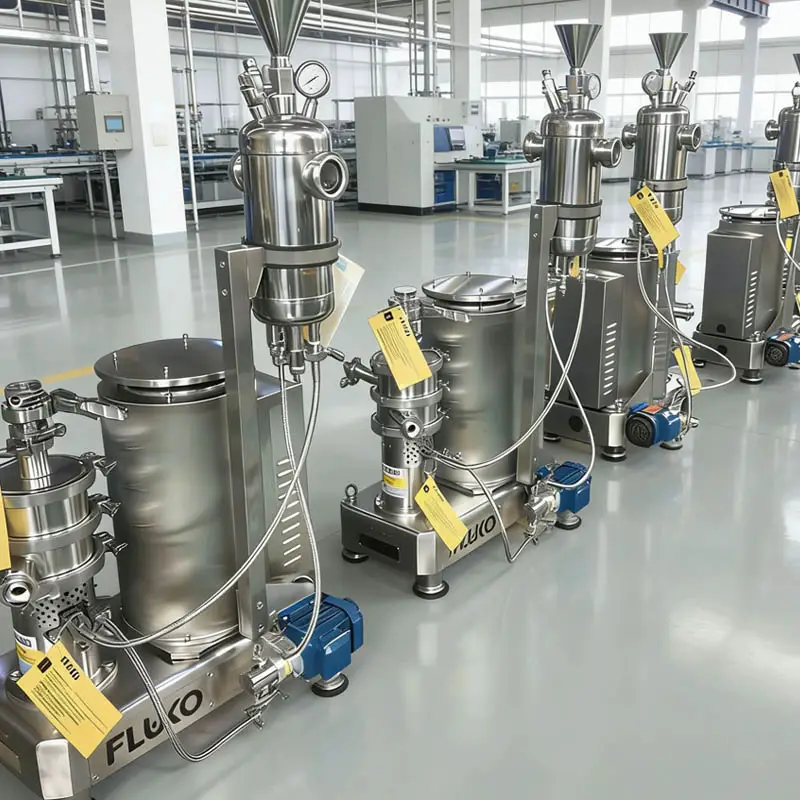
Selecting an industrial mixing supplier involves more than comparing equipment prices, processing capacity, and delivery schedules. For manufacturers in chemicals, cosmetics, pharmaceuticals, food processing, and other industries, supplier qualifications can influence product consistency, workplace safety, regulatory compliance, and long-term operating costs. Certifications provide useful evidence of a supplier’s management practices and equipment conformity, but their value depends on authenticity, scope, and validity.
Before signing a purchasing agreement, buyers should examine the relevant certificates, supporting technical documents, and quality-control procedures. Understanding what each credential actually demonstrates helps procurement teams distinguish credible manufacturers from suppliers whose compliance claims lack sufficient evidence.
ISO 9001: Quality Management System Certification
ISO 9001 is one of the first credentials to examine when evaluating a potential supplier. It specifies requirements for a quality management system, helping organizations establish consistent processes, monitor performance, address nonconformities, and pursue continual improvement. However, certification does not guarantee that every individual machine will meet a buyer’s expectations.
For a mixing equipment company, the certificate’s scope matters as much as the standard itself. Buyers should confirm that the certified activities cover relevant operations, such as equipment design, manufacturing, assembly, or servicing, rather than unrelated business functions.
Request the certificate and check the legal entity name, issuing certification body, covered activities, expiration date, and current status. ISO itself does not issue certificates; certification is conducted by external bodies.
Product Conformity and Applicable Safety Certifications
A management system certificate and a product conformity document serve different purposes. ISO 9001 concerns an organization’s quality management system, while product-specific compliance evidence addresses applicable safety, health, environmental, or technical requirements.
Buyers sourcing equipment for the European Economic Area should investigate whether the proposed machine requires CE marking under applicable EU legislation. The European Commission explains that manufacturers must identify relevant requirements, complete the appropriate conformity assessment, prepare technical documentation, and issue an EU Declaration of Conformity when required. CE marking is not itself a certificate issued by a central EU authority.
Ask the supplier to provide the Declaration of Conformity for the exact model being purchased, along with supporting documentation where applicable. Verify that the document identifies the correct manufacturer and equipment, references relevant legislation, and matches the machine’s intended use.
Requirements vary by destination market and equipment configuration. A document for one model should not automatically be accepted as evidence for another, particularly when specifications, electrical systems, or safety-related components differ.
Electrical Safety and Relevant Technical Standards
High shear mixers combine motors, electrical controls, rotating components, and sometimes automated processing systems. Electrical safety documentation is therefore important when evaluating equipment for continuous production or integration into an existing manufacturing line.
IEC 60204-1 addresses electrical equipment of machinery, including general requirements for electrical, electronic, and programmable electronic systems. A buyer should ask which electrical safety standards apply to the proposed equipment and request supporting test reports or conformity documents where appropriate. The review should cover emergency stops, protective bonding, control circuits, and electrical protection, depending on the machine design.
A high shear mixer may operate at substantial rotational speeds, making the relationship between mechanical guarding, electrical controls, and safe operation particularly important. Documentation should correspond to the supplied configuration rather than a generic product family.
Industry-Specific Certifications and Process Compliance
Not every high shear mixer requires the same certifications. Requirements depend on the material being processed, the production environment, and the destination market. Buyers in regulated industries should establish applicable requirements before requesting quotations.
For food or pharmaceutical applications, procurement teams may need additional evidence concerning hygienic design, material compatibility, cleanability, or suitability for the intended process. Chemical manufacturers may prioritize corrosion resistance, hazardous-area requirements, or other site-specific safety measures.
These considerations should not be confused with universal certification requirements. A supplier’s general quality certificate cannot independently establish that a machine is suitable for every regulated application. Instead, buyers should request relevant declarations, material documentation, test results, and technical assessments that address the actual production conditions.
The contract should clearly identify required standards and deliverable documents. This prevents misunderstandings about whether compliance evidence is included in the purchase price or must be supplied separately.
Verify Certificate Authenticity and Manufacturing Capabilities
A certificate displayed on a website is a starting point, not the end of due diligence. Buyers should verify its validity through the issuing body or an appropriate accreditation database. They should also confirm that the named legal entity is the company responsible for manufacturing and supplying the equipment.
FLUKO provides a relevant example for procurement teams to investigate. FLUKO obtained ISO 9001 system certification from TÜV Rheinland in 2006. The company also describes its commitment to independent research and development, technological innovation, and quality management.
Before placing an order, buyers should request current certification documents and confirm their scope and status rather than assuming that a historical certification remains valid today. They should also review manufacturing experience, quality inspection procedures, technical support, and the supplier’s ability to meet application-specific requirements.
A qualified mixing equipment company should be able to explain how documented quality procedures connect to actual production practices, equipment testing, and after-sales service.
Make Certification Verification Part of Supplier Selection
Certifications are most useful when treated as one component of a broader procurement assessment. Buyers should verify quality management credentials, applicable product conformity documents, electrical safety evidence, and any industry-specific requirements relevant to the intended application.
They should also confirm certificate validity, document scope, and consistency with the equipment being ordered. For FLUKO and other mixing equipment companies, this approach helps buyers assess documented qualifications alongside engineering capabilities and technical support.
Ultimately, careful verification reduces avoidable compliance risks and establishes clearer expectations before a contract is signed. A well-documented supplier relationship gives both parties a stronger foundation for reliable production, consistent quality, and long-term cooperation.