
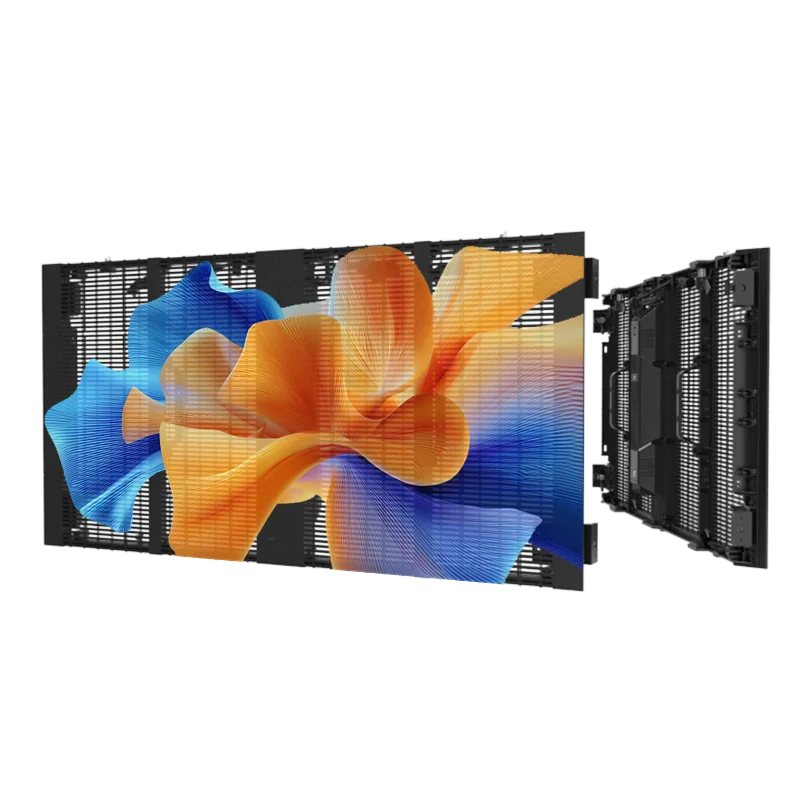
Rental LED wall displays have become an important part of modern event production, supporting everything from corporate conferences and product launches to concerts, exhibitions, and outdoor festivals. For event production companies and audiovisual (AV) rental providers, selecting the right display involves more than image quality. Cabinet weight, installation time, structural stability, transparency, and configuration flexibility all influence operating costs and the quality of the final presentation.
A well-planned LED wall rental solution should match the venue, viewing distance, content, and event duration. Understanding the main display types and their specifications helps rental businesses choose equipment that meets client expectations while remaining practical to transport, install, maintain, and reuse across different projects.
Main Types of LED Wall Displays for Rental and Events
1.Traditional Modular LED Walls
Modular LED walls are widely used for conferences, concerts, exhibitions, and corporate presentations. Individual cabinets connect to form a larger display, allowing production teams to adjust screen dimensions to suit the venue and stage layout.
When comparing options, pixel pitch is a key specification. It measures the distance between adjacent pixels: a smaller pitch generally produces sharper images at closer viewing distances. Fine-pitch displays suit conference rooms and camera-facing stages, while coarser pitches can be practical for large venues where audiences sit farther away.
2.Transparent LED Displays
Transparent LED displays are useful when event organizers want to present dynamic visuals without completely blocking the background. They can support product launches, retail activations, exhibition booths, and creative stage designs where visibility through the screen contributes to the overall experience.
HDC’s ZL Series offers transparent display characteristics alongside a lightweight structure and a slim profile. Its design supports fixed installation, curved splicing, and right-angle splicing, providing flexibility for different creative layouts. These features make it worth considering for projects that require visual impact while preserving architectural aesthetics or natural light.
3.Stage-Focused Rental LED Displays
Concerts, touring productions, and large-scale corporate events require displays that can be installed, dismantled, transported, and reconfigured repeatedly. For these applications, cabinet construction and connection methods are just as important as image performance.
HDC offers a display designed for commercial stage events, featuring a low wind-load structure intended to improve stability and a slim profile of 89 mm. Support for flexible combinations of different cabinet sizes can help production teams adapt the display to varying stage dimensions. Actual installation suitability still depends on the complete rigging design, venue conditions, and the manufacturer’s approved configuration.
Key Specifications to Evaluate Before Renting or Buying
Choosing an LED wall rental system requires an assessment of technical performance alongside operational requirements. Several specifications deserve particular attention.
Pixel Pitch and Viewing Distance
Pixel pitch affects image detail, especially when viewers are close to the screen. A P2.5 display, for example, has a nominal pixel pitch of 2.5 mm, whereas P3.9 has a pitch of approximately 3.9 mm. The finer-pitch option generally provides greater pixel density, but may involve a higher equipment cost.
Rental providers should establish the closest audience position, expected camera distance, and content type before selecting a model. Reviewing a specification sheet and testing the display with actual presentation content can help prevent poor readability or visible pixel structure.
Brightness and Environmental Protection
Indoor and outdoor events create different display requirements. Indoor screens generally operate under more controlled lighting, while outdoor displays must remain visible in daylight. Brightness should therefore match ambient conditions rather than simply being set as high as possible.
For outdoor deployments, buyers should also verify the ingress protection rating for dust and water resistance. An indoor model should not be assumed suitable for rain or other outdoor exposure. The required protection level depends on the installation environment, including whether the screen is exposed to wind-driven rain or other weather conditions.
Cabinet Dimensions, Weight, and Refresh Rate
Cabinet dimensions affect screen configuration, transport, and installation planning. Lightweight cabinets can simplify handling, but total system weight, rigging loads, and support structures must all be considered. Compatible cabinet combinations can also reduce the need for awkward edge sections or separate display configurations.
Refresh rate deserves attention when a screen will be recorded or livestreamed. A higher refresh rate can help reduce visible flicker and camera artifacts, although results also depend on the LED control system, camera shutter settings, and signal chain. Buyers should confirm the actual model specifications rather than assuming every display in a product family performs identically.
How to Choose the Right LED Wall Rental Solution
Start by defining the event’s purpose, venue dimensions, audience layout, and budget. A corporate presentation may prioritize text clarity and accurate colors, while a concert may require a large canvas, creative shapes, and smooth playback for live footage.
Next, compare the installation requirements. Consider whether the screen will be ground-supported or suspended, whether curved or right-angle configurations are needed, and how much time the crew has for setup and dismantling. Transparent displays are particularly relevant when preserving sightlines or integrating visuals into architectural features is part of the design.
Finally, evaluate supplier support, spare parts availability, maintenance access, and documentation. For rental businesses, equipment must perform consistently across repeated deployments. A slightly lower purchase price may offer limited value if the cabinets are difficult to handle, repairs take too long, or the system cannot accommodate common client requirements.
As a provider of creative and commercial LED displays, HDC brings together research and development, manufacturing, sales, and service. Its ZL Series and stage-focused display options offer starting points for businesses assessing transparent structures, installation flexibility, and event-specific design requirements. Buyers should request the relevant product datasheet and confirm model-specific specifications before making a purchasing decision.
Building a More Flexible Event Display Inventory
The right rental display is not necessarily the model with the highest brightness or finest pixel pitch. It is the system that balances image quality, installation efficiency, structural requirements, and long-term operating costs for the intended applications.
For AV rental companies and event production businesses, a carefully selected LED wall rental inventory can support a broader range of projects without compromising practical deployment needs. By comparing specifications against real event conditions and reviewing suitable options from manufacturers such as HDC, buyers can make more informed equipment decisions and build display solutions that serve clients reliably across different venues and event formats.