
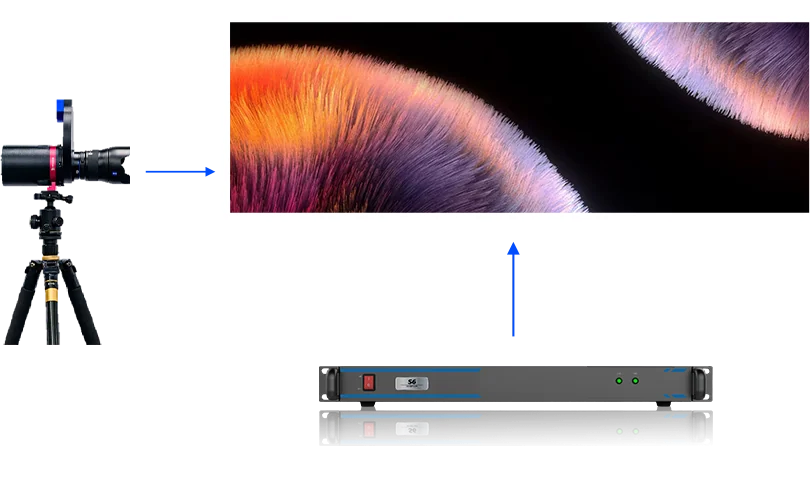
A professional LED display is not only made up of LED modules and cabinets. Behind every clear image and smooth video playback, a complete control system works together to process and deliver visual information. Among these components, the LED sending card plays a critical role by transmitting image data from the control system to the LED display.
Many customers know that LED screens require controllers but are less familiar with how signals actually reach thousands or millions of LED pixels. Understanding the role and working process of a sending card helps system integrators, engineers, and buyers choose the right control solution for their projects.
In a modern LED display workflow, the sending card acts as the connection point between the video source and the LED screen. It ensures that the content is correctly processed, distributed, and displayed with accurate colors, timing, and resolution. Kystar provides professional LED control products designed to support stable signal transmission for various LED applications.
What Is an LED Sending Card?
An LED sending card is a hardware device used in an LED display control system to send processed video data from a controller or computer to the LED display receiving system. It converts standard video signals into a format that LED receiving cards can understand and use to control LED modules.
Unlike a normal graphics card used in computers, a sending card is specifically designed for LED displays. LED screens consist of many small modules arranged together, and each module requires precise data instructions to show the correct brightness, color, and image position.
The main function of a sending card is to distribute image information efficiently. It receives content from a video processor, media server, or computer, processes the data according to the LED screen configuration, and sends the information through network cables or optical fiber connections.
In a complete LED display system, the signal flow usually follows this structure:
Video Source → Video Processor → Sending Card → Receiving Card → LED Modules
Each component has a different responsibility. The video source creates the content, the processor manages the image format, the sending card transfers the data, and the receiving card controls the LED modules that produce the final image.
Where Does an LED Sending Card Work in an LED Display System?
The position of a sending card in the control chain determines its importance. It is located after the image processing stage and before the LED cabinets, making it responsible for reliable communication between the control equipment and the display hardware.
When a video signal enters the system, it may contain high-resolution images, videos, graphics, or live camera feeds. The control system first analyzes this information and prepares it for LED display output.
The sending card then divides the processed image data into smaller sections based on the structure of the LED screen. Since large LED displays may contain thousands of cabinets and millions of pixels, the data must be organized properly before transmission.
For example, a large stage LED wall may have multiple cabinets arranged horizontally and vertically. The sending card ensures that each section receives the correct image information so that the entire screen appears as one complete visual surface.
Without a reliable transmission device, even a high-quality LED panel cannot display content correctly. Problems such as incorrect image positioning, flickering, or signal interruption may occur when the data communication between the controller and LED modules is unstable.
How Does an LED Sending Card Work?
The working process of a sending card involves several important steps.
- Receiving Video Data
The first step is receiving image signals from the control source. Depending on the system design, the content may come from a computer, video processor, or professional playback system.
The incoming signal contains information about every frame, including color data, brightness levels, and pixel positions. The sending card receives this information and prepares it for LED transmission.
- Processing and Organizing Image Information
After receiving the signal, the sending card processes the data according to the LED screen configuration. It identifies the display resolution, cabinet arrangement, and pixel mapping requirements.
This step is essential because LED screens are often customized for different projects. A commercial video wall, concert stage display, or creative curved LED installation may have completely different layouts.
The sending card ensures that the image data matches the physical structure of the display, allowing every LED module to show the correct part of the image.
- Transmitting Data to Receiving Cards
Once the data is organized, the sending card transmits it to receiving cards through Ethernet cables or optical fiber connections.
The receiving cards are installed inside LED cabinets and are responsible for controlling individual LED modules. They receive the transmitted information, decode the data, and send instructions to LED driver chips.
This process happens continuously during operation, allowing the LED screen to display real-time video with smooth movement and accurate synchronization.
- Maintaining Stable Display Performance
Professional LED projects require consistent performance, especially in environments such as live events, broadcast studios, and XR virtual production. The sending card helps maintain stable communication between the control system and LED screen.
A reliable transmission system reduces problems such as image delay, signal loss, and inconsistent output between different sections of a large display.
What Are the Key Functions of an LED Sending Card?
Beyond basic signal transmission, a sending card provides several important functions for professional LED systems.
One key function is resolution management. Large LED displays often require high-resolution content, and the sending card helps distribute large amounts of image data efficiently.
Another important function is multi-screen management. Professional installations may include multiple LED panels with different layouts. The sending card allows engineers to configure the display structure accurately.
Synchronization is also essential. When several LED cabinets work together, all sections must refresh at the same time to create a seamless image. A high-quality sending card supports stable timing control to improve visual consistency.
Kystar develops sending card solutions with features designed for professional LED applications, helping integrators build reliable systems for different display requirements.
LED Sending Card vs Receiving Card: What Is the Difference?
Although both devices are important parts of an LED control system, they perform different tasks.
The sending card is responsible for transmitting image data from the control source to the LED cabinets. It works as the communication bridge between the processing equipment and the display.
The receiving card, on the other hand, is installed closer to the LED modules. Its job is to receive the transmitted data and control the actual operation of the LEDs.
Simply explained, the sending card tells the receiving card what image information should be displayed, while the receiving card manages how the LED modules create that image.
Both components must work together to achieve stable and accurate visual output.
How to Choose the Right LED Sending Card?
Selecting the correct sending card depends on several project factors.
First, engineers should consider the size and resolution of the LED display. Larger screens require higher data transmission capability to handle more pixels.
Second, the input and output requirements should match the project. Applications such as XR studios, broadcast environments, and large event stages may require higher performance because they involve real-time content and strict synchronization requirements.
The transmission distance is another consideration. For large venues, optical fiber transmission may be preferred because it supports longer distances with stable signal quality.
Kystar offers different sending card solutions to meet various professional LED display needs, helping customers create efficient and scalable control systems.
Conclusion
An LED sending card is a fundamental component in a professional LED display workflow. It connects the video processing system with the LED screen by receiving, organizing, and transmitting image data to ensure accurate visual output.
Understanding how a sending card works helps customers better evaluate LED display solutions and understand why signal transmission quality directly affects screen performance.
From large-scale stage productions to commercial displays and advanced visual environments, Kystar continues providing professional control technologies that support stable and precise LED experiences. Choosing the right sending card allows LED systems to achieve better image quality, smoother operation, and greater creative flexibility.