
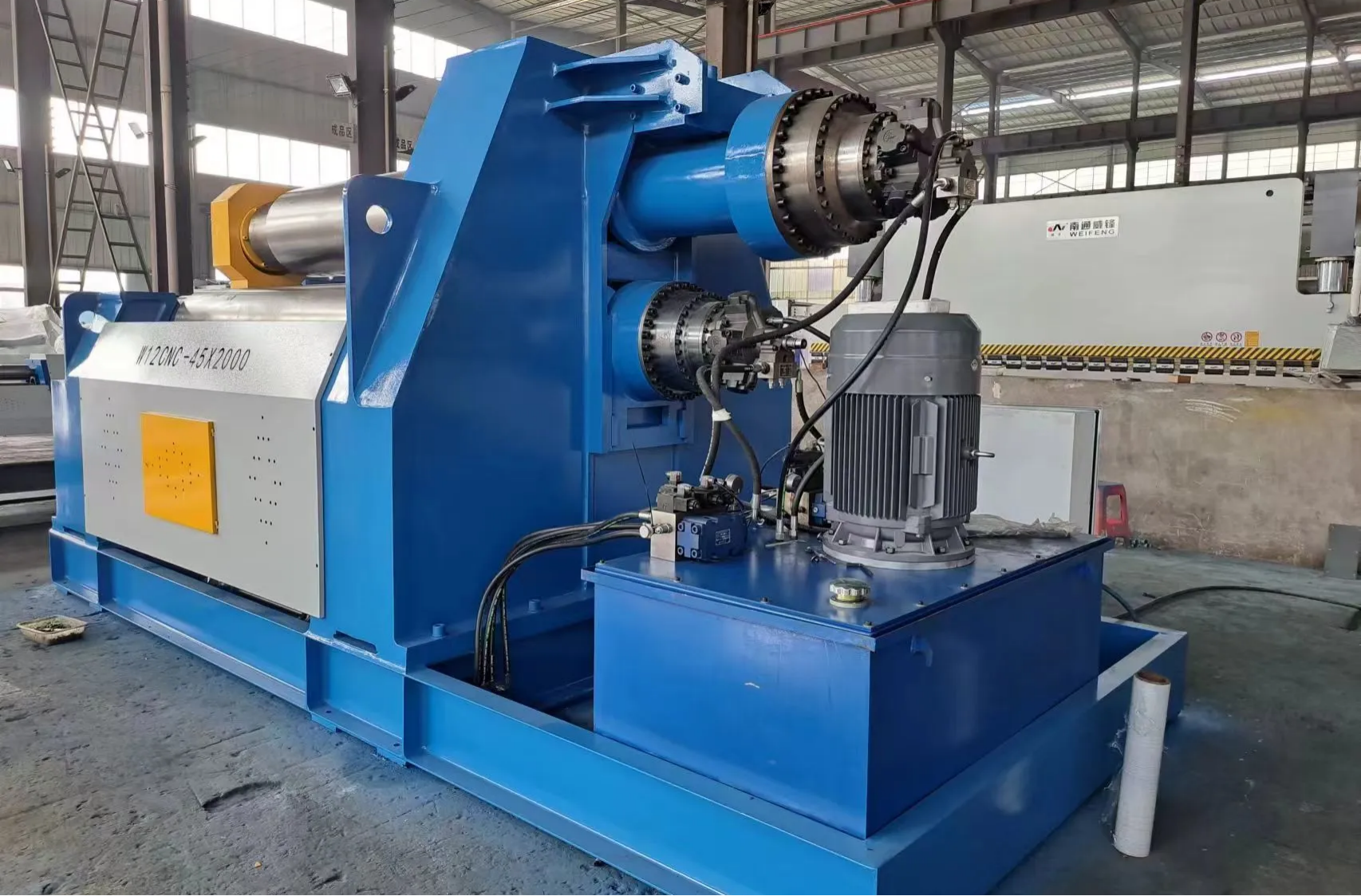
CNC and conventional machines often perform the same basic process, but they organize production in different ways. Conventional equipment depends more heavily on direct operator adjustment. CNC equipment stores positions, sequences, and process data in a numerical control system.
The difference affects setup work, repeat orders, operator involvement, and the range of geometry handled efficiently. For factories comparing sheet metal fabrication equipment, the key question is how much variation exists in normal production.
A stable part family places different demands on a machine from a workshop that changes dimensions, programs, and tooling throughout the day.
What Changes When a Machine Uses CNC Control?
CNC moves part of the setup logic into a programmable system. On a press brake, the controller coordinates functions such as ram position, back-gauge movement, crowning, and auxiliary axes. Stored programs preserve settings for jobs that return later.
RBQLTY’s press brake range illustrates several control levels. Published DA-53T models support tool, material, and product libraries, crowning control, and multiple controlled axes. DA-69T configurations add graphical programming and 3D visualisation. The company also offers simpler NC press brake options.
On cutting equipment, CNC serves another role. A laser or plasma system follows a programmed path to produce contours, holes, and other shapes. RBQLTY’s range includes fiber laser and plasma machines in flat-sheet, pipe, combined, and feeder-based formats.
The common benefit is programmability. Its value increases when the process involves repeated positioning, changing geometry, or several coordinated movements.
When Does Conventional Equipment Remain Practical?
Simpler-control machinery still fits many production tasks. A hydraulic shear making repeated straight cuts does not require a contour program. The operator focuses on sheet position, back-gauge settings, blade condition, and the cutting cycle.
Basic bending work follows a similar pattern. A workshop producing a narrow range of parts with familiar tooling and limited changes can operate effectively with a simpler control system. Extra axes or graphical programming add little value when those functions rarely enter the setup.
Conventional equipment also places more emphasis on operator method. A stable process, clear work instructions, and experienced setup practices help maintain consistency. This does not make the machine inferior. It means the production model relies more on direct control at the machine.
The practical comparison therefore starts with job variation. If the dimensions, tooling, and sequence stay largely unchanged, a simpler machine often remains a sensible choice. It also keeps training and programming demands closer to the needs of the actual process instead of adding functions that operators rarely use.
Where Does CNC Sheet Metal Fabrication Equipment Offer a Clearer Advantage?
CNC becomes more useful as job variety grows. Short batches, recurring part numbers, complicated bend sequences, multiple gauge positions, and frequent design changes create more opportunities for stored settings and automatic positioning to reduce setup work.
Profile cutting provides an even clearer example. A laser or plasma cutter requires programmed motion when the part contains curves, holes, slots, or nested shapes. In that situation, cnc sheet metal fabrication equipment does more than automate a manual adjustment.
It enables the machine to execute geometry that a straight-cutting process cannot reproduce. Stored programs also improve information transfer between shifts. A returning job begins from a defined digital setup instead of handwritten notes or memory.
Operators still apply knowledge about tooling, material behavior, and process checks, but their effort moves toward verification and adjustment. Training also changes with the control level.
Conventional equipment places greater emphasis on direct machine setup, while CNC work introduces programming, data management, and program verification as part of the operator’s routine. CNC is most valuable when repeatable complexity is part of normal production.
In that setting, CNC sheet metal fabrication equipment turns recurring positions and sequences into reusable production data.
Why Do Many Workshops Use Both Control Approaches?
A mixed workshop often works more efficiently when each job goes to the simplest suitable process. Straight blanks fit a shear. Detailed profiles fit a CNC cutting system. Routine bends can stay on a simpler press brake, while complicated or frequently changing parts move to a more flexible CNC brake.
This approach protects capacity. Advanced equipment is reserved for work that benefits from programmable motion, while predictable jobs stay on machines that require less programming and setup overhead.
RBQLTY’s catalogue covers laser cutting, press brakes, shearing, rolling, punching, plasma cutting, and duct-processing machinery. That product mix reflects the way real fabrication shops combine different control levels rather than depending on one universal platform.
When comparing CNC with conventional machinery, factories should therefore look at geometry, changeover frequency, repeat orders, operator workflow, and the amount of data that has to be recreated for every job. Those factors reveal where CNC provides a practical advantage and where simpler control remains sufficient.
Conclusion
CNC and conventional machinery suit different patterns of work. RBQLTY supplies equipment across both control approaches, so the comparison does not have to end with one technology replacing the other.
Stable jobs fit simpler controls, while varied geometry and frequent changeovers favor programmable positioning and stored data. The right machine mix follows the actual workload on the shop floor.