
Electrical conduit systems protect cables, organize wiring routes, and support maintenance in industrial facilities. However, fittings used in hazardous locations have different requirements from those used in ordinary buildings. The differences involve connection design, material selection, sealing, and compatibility with explosion proof electrical equipment. Understanding these factors helps engineers, contractors, and purchasing teams select components according to the installation environment instead of relying on appearance or price alone.
Why the Installation Environment Matters
Oil refineries, chemical plants, gas processing facilities, and pharmaceutical production sites may contain flammable gases, vapors, or combustible dust. Electrical equipment installed in classified hazardous areas must be suitable for the specific risks present. Ordinary conduit fittings may provide mechanical protection, but that function alone does not establish their suitability for hazardous locations.
Standard fittings are commonly used in commercial buildings, offices, warehouses, and industrial areas without classified explosion hazards. Selection usually focuses on conduit size, material, moisture exposure, and mechanical strength. Project teams should identify the area’s classification before choosing fittings, since the requirements for an ordinary workshop may differ significantly from those of a gas processing unit.
Design Differences Affect Equipment Compatibility
Explosion-rated fittings are designed for use within a defined hazardous-area protection system. Depending on the protection method, their construction may involve specific threaded connections, sealing arrangements, or other design features. These details must match the connected equipment and applicable installation requirements.
Standard fittings mainly support cable routing and mechanical protection. Their construction may suit indoor installations or exposed outdoor environments, depending on the material and product rating. However, a weather-resistant fitting is not automatically suitable for a location where an explosive atmosphere may occur. Buyers should check the intended application rather than judge suitability by the appearance of the component.
Thread compatibility also deserves attention. Installers need to verify thread type, size, engagement, and the manufacturer’s instructions. A mismatch can affect mechanical stability or compromise a connection that forms part of a certified assembly. Adapters and reducers should be selected according to approved configurations instead of being added simply because their dimensions appear compatible.
Sealing Requirements Depend on the Application
Conduit systems can protect wiring against impact, moisture, dust, and industrial contaminants. In hazardous locations, the role of a sealing fitting depends on the equipment design and protection method. Some installations require specific sealing components, while others follow different arrangements defined by the applicable standards and equipment documentation.
Weather-resistant connections and explosion-protected conduit seals serve different purposes. Ordinary sealing arrangements may reduce moisture or dust entry, while hazardous-area conduit sealing must meet the requirements of the relevant protection method. Engineers should review the conduit route, enclosure entries, and applicable installation standards. They must also confirm the required sealing materials and installation procedures before selecting fittings.
Material Selection Influences Long-Term Maintenance
Chemical plants and coastal facilities may expose electrical installations to moisture, salt, cleaning agents, or corrosive vapors. Corrosion can damage threads, weaken connections, and make future maintenance more difficult. Material selection therefore deserves attention alongside the required protection method.
Stainless steel, coated metals, and other materials have different properties and limitations. The appropriate choice depends on the process environment, temperature, cleaning procedures, and expected service conditions. Buyers should verify material compatibility with the actual exposure rather than assume that a corrosion-resistant finish will suit every chemical environment.
How Buyers Should Compare Fitting Specifications
Procurement teams should begin with the hazardous-area documentation. Gas and vapor classifications differ from combustible dust classifications, and equipment suitability depends on factors such as the zone, gas group, temperature class, and protection concept. Approval for one application should not automatically be treated as approval for another.
When sourcing explosion proof conduit fittings, buyers should request relevant certificates, technical drawings, and installation instructions. They should also confirm that each component is suitable for the intended location and compatible with connected equipment. Reviewing these documents before ordering helps identify specification gaps and reduces the risk of unsuitable substitutions during installation.
Why the Complete Assembly Needs Review
Conduit sealing fittings form part of a wider electrical installation. Their performance depends on compatible conduit connections, suitable sealing arrangements, and correct installation. Engineers should review the complete wiring route, including connections to enclosures and transitions between conduit sections. Where flameproof conduit seals are required, their placement and installation must follow applicable standards and equipment instructions.
A consistent component specification can also simplify spare-parts management. Maintenance teams can identify compatible replacements more easily when product references and installation requirements are documented. However, replacement parts must retain the required ratings and compatibility. Substituting a standard fitting because its dimensions appear suitable may compromise the intended protection of the installation.
How Explosion-Proof Sealing Fittings Differ in Practice
Conduit sealing requirements provide a practical example of the differences between standard and explosion-proof fittings. Ordinary conduit accessories may support mechanical connections and wiring protection, but they are not automatically suitable for hazardous-area sealing applications. Engineers should review the protection requirements and the intended function of each fitting.
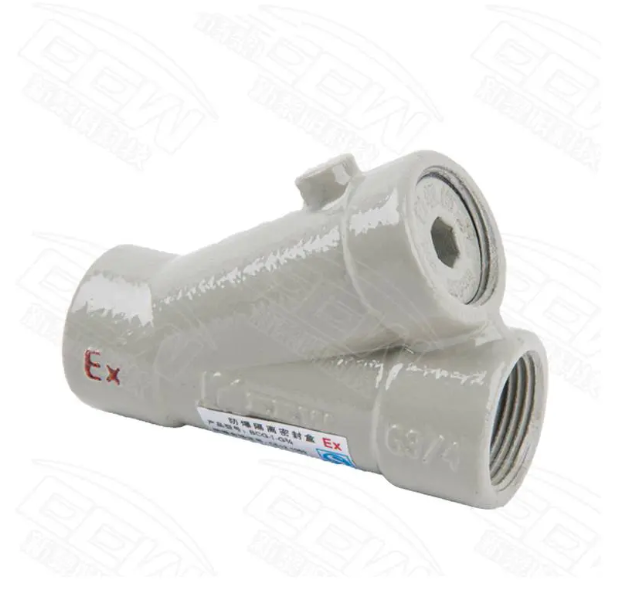
The BCG Explosion Proof Sealing Fittings from Sunleem EEW are designed for conduit isolation in steel pipe wiring systems. The product uses a die-cast aluminum alloy housing with an electrostatic powder-coated surface. Its listed applications include explosive gas atmospheres in Zones 1 and 2 and combustible dust environments in Zones 21 and 22.
When comparing explosion proof conduit fittings with standard alternatives, buyers should examine the connection method, sealing requirements, material compatibility, and installation documentation. The exact product configuration must match the classified area and connected equipment. Engineers should also confirm applicable certification details and installation instructions before approving the fitting for use.
Base the Final Choice on Verified Requirements
The differences between explosion-rated and standard conduit fittings extend beyond construction and price. Protection methods, sealing arrangements, material compatibility, and installation requirements all influence selection. Engineers should evaluate these factors together rather than assume that standard fittings can serve the same purposes in classified hazardous areas.
For projects involving explosion proof electrical equipment, conduit connections should be reviewed against the relevant hazardous-area requirements. Sunleem EEW offers the BCG Explosion Proof Sealing Fittings for conduit isolation in steel pipe wiring systems. Buyers can request product specifications, installation instructions, and relevant approval documents to assess their suitability. Clear technical requirements help contractors and procurement teams select compatible fittings for the intended installation.