
Photography has become increasingly mobile, and professional users often carry more than cameras and lenses. Power banks, charging cables, batteries, memory cards, and smartphones can all become part of a working kit. For business buyers, this creates a clear design challenge: how can a camera bag keep power accessories organized without making the main equipment compartment harder to access? One practical solution is to integrate cable management loops into a custom camera bag, creating a dedicated path for charging cables while keeping sensitive camera equipment protected.
Why Cable Management Matters in a Camera Bag
A modern bag for camera equipment needs to support both equipment protection and everyday usability. Photographers may need to charge a phone, monitor, action camera, LED light, or other electronic accessory while traveling or working on location. Without dedicated cable organization, charging wires can become tangled with lenses, batteries, and smaller accessories.
Cable management loops offer a simple structural solution. Small webbing loops can be positioned inside an accessory compartment or near a power-bank pocket. A cable can pass through the loop and remain close to the device being charged. This reduces loose cable movement and makes the charging setup easier to manage.
For brands developing private-label photography products, such details can also create meaningful differentiation without dramatically changing the overall bag structure.
Designing a Custom Camera Bag Around Power Banks
The first step is to consider where the power bank will sit. A dedicated pocket should provide enough space for the selected power-bank size while keeping it separate from cameras and lenses. The cable management loop can then be placed close to the pocket opening.
This arrangement allows the power bank to remain secured while the charging cable exits through a controlled point. Designers should avoid placing loops where they interfere with zippers, padded dividers, or frequently accessed equipment.
The number and position of loops can also vary according to the intended market. A compact camera bag for casual users may need only one or two cable loops. A larger professional model could include several attachment points for different electronic accessories.
Integrating Loops Without Sacrificing Equipment Protection
A key consideration for any custom camera bag is maintaining the protective function of the main storage area. Cable loops should not introduce unnecessary hardware, protrusions, or pressure points around cameras and lenses.
Webbing loops are useful because they can be sewn directly into selected panels. Their low-profile construction helps maintain a clean interior while providing a reliable anchor for cables. Reinforced stitching is especially important when users repeatedly pull charging cables through the loops.
The placement of seams also deserves attention. A manufacturer should evaluate how loop attachment affects the lining, padding, and structural strength of the surrounding panel. Prototype testing can help identify whether the cable-management feature remains secure after repeated use.
Using Multi-Pocket Design for Better Power Organization
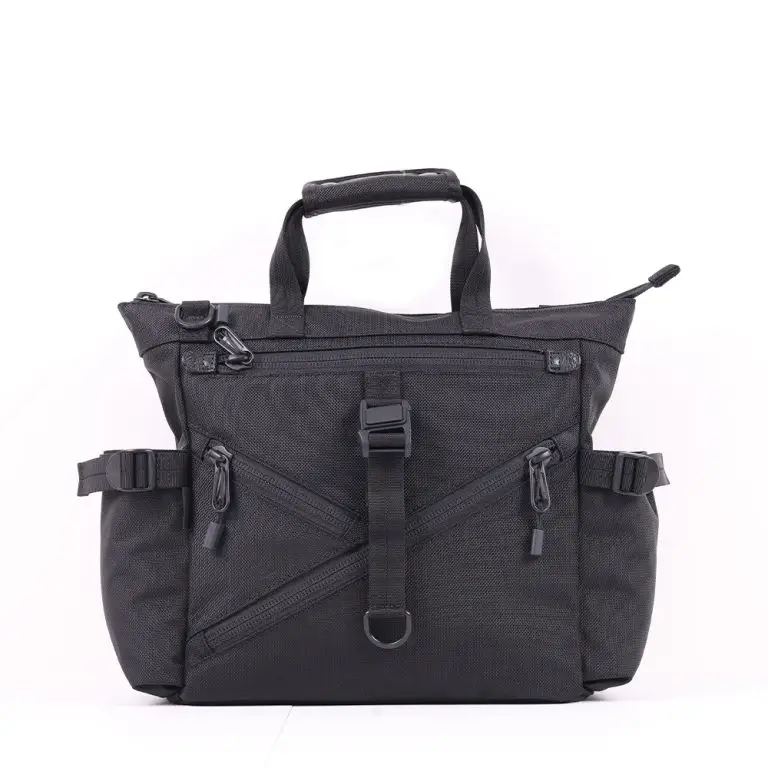
ChangRong’s Functional Transform Series Camera Bag For Men demonstrates how a practical multi-pocket approach can support photography and daily use. The product is designed with multiple storage areas for cameras and accessories, while its transformable structure supports different carrying needs.
For business product development, this type of multi-pocket architecture provides a useful foundation for adding dedicated technology features. A power-bank compartment can occupy one section, while cable loops can be integrated into an adjacent pocket. Other small sections can hold charging adapters, memory cards, batteries, or personal items.
This approach makes the bag for camera equipment more versatile without turning it into an overly specialized technical case. That flexibility can be valuable for brands targeting photographers who also commute, travel, or create content outdoors.
Material and Manufacturing Considerations
Cable management features may look simple, but their durability depends on material selection and construction quality. ChangRong describes its camera bag design as using high-quality, wear-resistant fabric intended for long-term use.
For customized production, buyers can evaluate webbing width, stitching density, lining construction, and reinforcement around attachment points. These details matter because cables are frequently pulled, inserted, and removed during daily use.
ChangRong’s manufacturing process includes pattern making, precision cutting, sewing and component assembly, followed by comprehensive finished-product testing. The company also states that it provides OEM and ODM development, allowing brands to adapt compartment layouts and functional details to specific requirements.
Why OEM Development Makes the Feature More Valuable
For business buyers, cable loops should be considered part of the product architecture rather than an isolated accessory feature. During OEM or ODM development, manufacturers can adjust the power-bank pocket, cable exit position, loop placement, and surrounding compartments together.
ChangRong supports customized production from sampling through bulk manufacturing and offers design-development assistance for brands. Its stated production capabilities include two factories, seven sewing lines, and flexible customization support.
This integrated approach allows buyers to test usability before mass production. A prototype can reveal whether cables are easy to reach, whether the power bank remains secure, and whether the loops withstand repeated use.
Building a More Functional Photography Product
Cable management loops are a relatively small feature, but they can solve a real problem for photographers and mobile creators. When combined with dedicated power-bank storage, multiple accessory pockets, durable materials, and a practical carrying structure, they can make a custom camera bag considerably easier to use.
ChangRong’s photography bag range includes camera-focused convertible designs, while its manufacturing model supports OEM and ODM customization for international brands. For buyers developing a differentiated bag for camera equipment, integrating cable management during the design stage can turn a basic storage product into a more thoughtful everyday photography solution.
Turning Small Details Into Product Value
A successful camera bag does more than protect expensive equipment. It should help users organize the complete workflow surrounding that equipment, including charging and power management. Cable management loops provide an inexpensive and practical way to bring greater order to power-bank use without compromising the core storage structure.
For brands seeking a custom camera bag, working with an experienced OEM/ODM manufacturer makes it easier to combine these functional details with pocket configuration, material selection, stitching, and overall product positioning. ChangRong‘s customization capabilities and photography bag portfolio provide a foundation for developing camera storage products that respond to real-world shooting and travel needs.